
Embedded Feedback throughout the CourseKata Textbook
August 24, 2026

One of the things we value most at CourseKata is giving students opportunities to explain their thinking. Throughout our textbook, students encounter open-ended questions that ask them to make predictions, interpret models, explain results, and reflect on what they are learning.
But there was a limitation: students could submit thoughtful responses without necessarily knowing whether they were on the right track. Although correct responses and explanations are embedded within the pages, students did not receive feedback directly after responding to questions.
Starting small: A feedback pilot
We initially introduced feedback on open-ended questions in Chapter 4 as a pilot. The idea was simple: after students submitted a response, they would be presented with a brief sample response to which they could compare their own thinking.
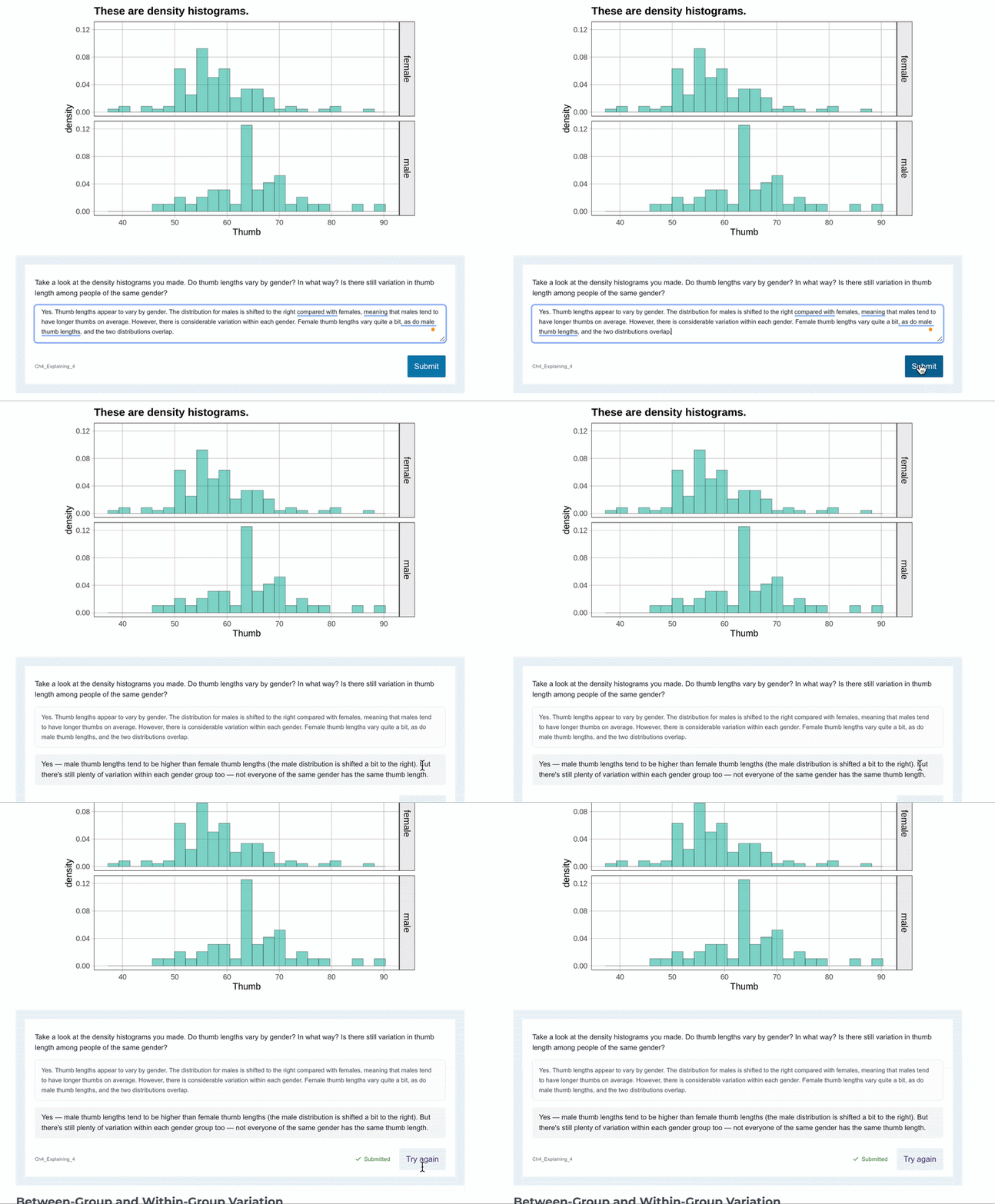
Rather than immediately adding feedback throughout the book, we wanted to see how students experienced it first.
And students noticed. When asked what helped them learn during the course, students described the feedback as helpful, encouraging, and reassuring. For example:
“I think the sample answers and explanations on the problems/questions in the reading are especially helpful because they let me know, if I am not correct, whether I am on the right track or not.”
“I liked the multiple choice questions or the open ended questions that would provide you with the correct answer after you have submitted it, so you can check your work.”
Their responses suggested that feedback could do more than tell students whether an answer was correct. It could make the experience of working through an interactive textbook feel more responsive – particularly when students were being asked to articulate their own reasoning.
From one chapter to the whole book
And students wanted more. As one student put it: “I think if all the boxes gave sample answers, it would be really helpful so I can get immediate feedback.”
So, we did just that. Based on what we learned from the Chapter 4 pilot, we expanded embedded feedback to open-ended questions across all chapters of CourseKata. We also We added feedback to most other question types, e.g., multiple choice, explaining briefly why the correct choice is correct, and often why an incorrect answer doesn't work
That represents a substantial change to the student experience. Students are no longer simply entering a response and moving on. Throughout the course, they now have opportunities to articulate their thinking, receive feedback, and use that feedback as they continue learning.
And, in typical CourseKata fashion, implementing the change created a new set of research questions.
What’s next?
Now that feedback is embedded throughout CourseKata, we’re interested in understanding its impact. Does receiving feedback change how students engage with open-ended questions? Do their responses become longer or more thoughtful? And ultimately, does feedback support students’ learning and their experience with CourseKata?
Building, studying, and improving
This is an example of the research–practice partnership at the heart of CourseKata. We can introduce a feature on a small scale, collect data about how students experience it, improve and expand it, and then use the resulting data to ask whether it is actually supporting learning.
The expansion of embedded feedback across CourseKata isn't the end of that process. It's the beginning of the next question: What happens when every open-ended response becomes an opportunity not just for students to explain their thinking, but to receive something useful in return?